
Part counselor, part navigator.
I'm a consultant, advisor, and seasoned change expert. I support leaders in changing the way work gets done through technology-led transformation — in environments where the nature of work is complex, interpretive, and human-driven.
I’m known for seeing the hidden context around transformation efforts — the technical realities, organizational dynamics, unspoken fears, and competing incentives that quietly determine whether change succeeds or stalls. My career inside large, highly federated professional services firms taught me how to navigate complexity, build trust across stakeholder groups, and create the conditions for meaningful, lasting progress.
I spent decades on the inside doing this work. Now I do it from the outside, where I can apply that experience in a different way.
Selected work.
- Reassessed a Big 4 firm's largest tax-technology investment in a $1.2B market segment that an internal review had deemed "nearly 100% at risk" — delivering the first wave of partnership compliance technology that protected its competitive position.
- Directed a $21M migration of a $500M+ U.S. corporate income tax practice onto a unified global tax platform — redistributing 1.2M+ labor hours and supporting 20% top-line growth over five years.
- Led foundational data product work for a global professional services firm's flagship AI initiative — including early prototypes supporting a joint Assurance/Tax business case for a $1.2B revenue stream.
- Recruited as a direct-admit partner to revitalize a Big 4 firm's Americas tax technology function after years of underinvestment — repositioning it as a growth driver and tripling solution delivery pace.
A few I keep coming back to.
Real transformation starts with the work, not the whiteboard.
Envisioning the work unconstrained by how it's currently done has real merit. AI is making that discipline more important than ever. But the transformation that follows has to start with the reality of how the work gets done today. The future-state design is usually compelling at the macro level. But the sub-processes hidden in the white space of the workflow documentation — the judgment calls, the exception handling, the workarounds that have accumulated for good reasons over years — almost never get the same attention.
Confidence is earned by surfacing reality, not by messaging around it.
Status reporting too often quietly shifts from surfacing reality to managing confidence. "Green" becomes a good-faith aspiration, not a measure. This isn't willful deception — it's human nature responding to an environment that rewards confidence over candor. Every strategy rests on assumptions about effort and environment that no leader expects to stay static — and the drift in reporting denies them the visibility to update those assumptions while it still matters.
A valid strategy survives translation.
A strategy can't be clear at the top and abstract everywhere else. Making the strategy comprehensible to every person involved in the work, at every level, must be prioritized. Change resistance is real, but most of what gets called resistance is a comprehension gap no one took the time to close.
Sponsorship is a coalition, not a person.
A single executive sponsor, however willing, almost never carries cross-functional change. What carries it is a coalition of peer C-suite and senior business leaders, each formally accountable for delivering the change in their respective domain. The coalition is a governance construct, not a sentiment — it has to be built, named, and held accountable.
I didn't set out to work in professional services.
As a kid, I thought I'd go into electrical engineering because I've always loved to tinker. I liked taking things apart and putting them back together to work even better. But engineering was not meant to be, and I took a full-time job as an orderly in a hospital to support myself out of high school.
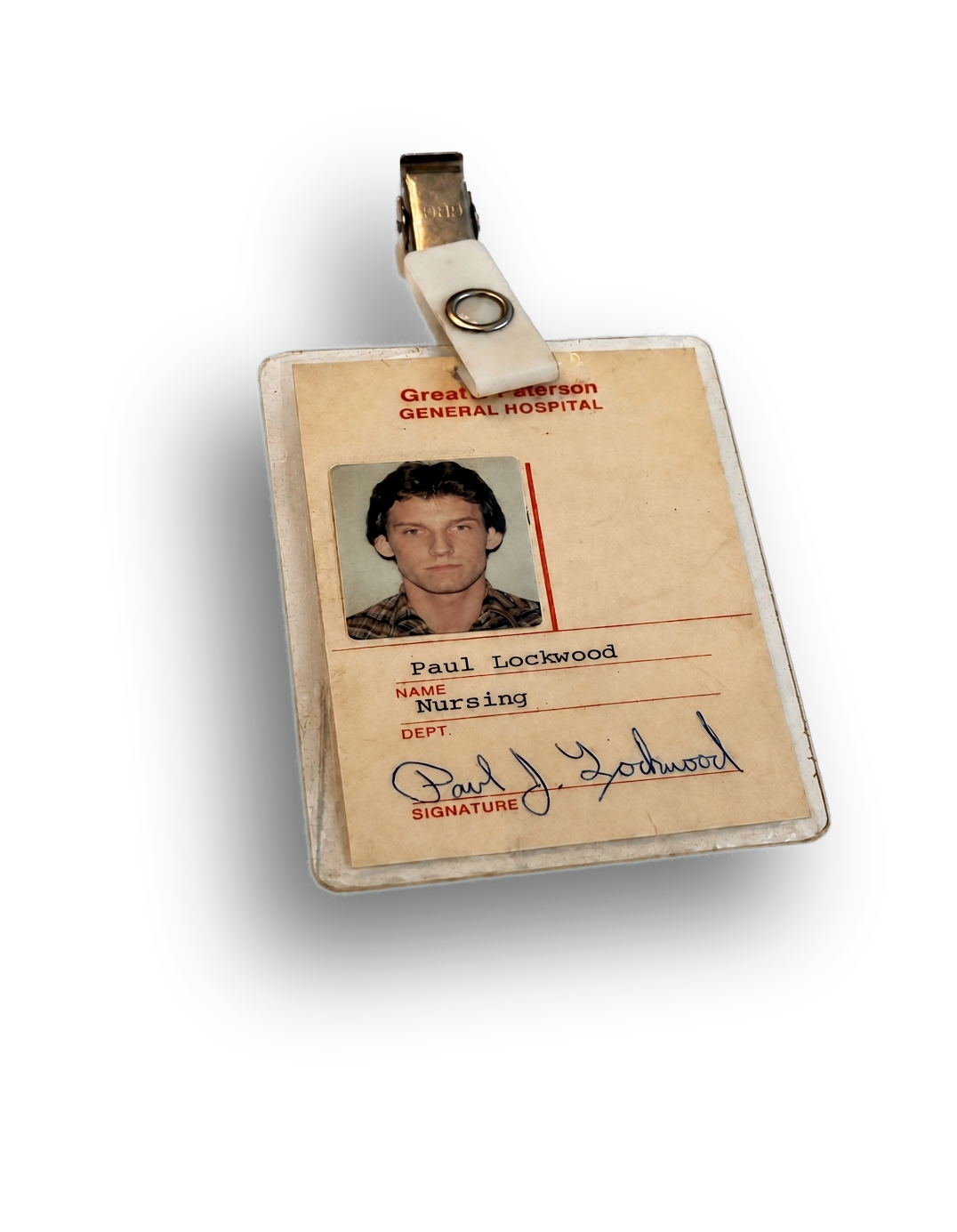 In my time in patient care, I gained a deep appreciation of how the smallest gestures can make a huge difference in someone's life. I carried this with me as I eventually made my way into accounting and a career working in tax at the Big Four. At the time, those two paths felt unrelated: one technical, one human.
Tax and accounting captivated me with their structure, logic, and the interplay between rules and judgment. As a natural context junkie, I thrived in a field where the quality of a solution was only as good as the breadth of the framing. Just as I was finding my footing in client service, technology began making quiet but meaningful inroads into how professional services were delivered. As digital tools evolved from isolated productivity enhancers to essential components of competitive delivery, the profession reached a tipping point — one that called for deliberate strategy, formal ownership, and new kinds of leadership.
I quickly found myself at the forefront of tax technology, stepping into roles so new they had both no precedent and no job description. Over the next three decades, this became my sweet spot as I helped leading firms including PwC and EY build their approach to tax technology from the ground up. But building the technology was never the hardest part. Driving meaningful change inside complex organizations — among professionals with both good and bad reasons to resist — was where the most difficult challenges lived.
It took me years to realize that both sides of me — the systems thinker and the caregiver — would eventually become essential to how I lead transformation. Complex change isn't just a mechanical problem. It's an emotional and contextual one. You have to understand how the parts fit together and how people carry the weight of change.
That's what I've spent my career learning how to do.